‘Stranger Things’ for Seniors? ‘The Boroughs’ Is Netflix’s Answer
Creators Will Matthews and Jeffrey Addiss on their bold gambit of a sci-fi drama with big stars and a hint of Spielberg

Even before you see Stranger Things creators Matt and Ross Duffer listed in the credits for Netflix’s new sci-fi series The Boroughs, you feel their vibe. The show doesn’t hide the inspiration it takes from the same well of ’80s classics as the Duffers’ blockbuster drama. There’s the booming, John Williams-inspired score that backs up The Boroughs title sequence, the arid New Mexico landscapes that call to mind E.T. the Extra-Terrestrial and Close Encounters of the Third Kind, the arrival of alien creatures — you don’t even need to know that the woman who plays Grace is Dee Wallace, an actual star of E.T., to connect the dots to the Steven Spielberg classic.
But while creators Will Matthews and Jeffrey Addiss agree that they love a lot of the same stuff as the Duffers, they took even more inspiration from what they call “second generation Amblin” — the movies made by filmmakers who had also grown up on E.T. and held on to that sense, as Matthews puts it, “that an adventure is worth going on because you might win.”

A key difference between The Boroughs and all of its forebears — well, maybe except for Batteries Not Included, which Addiss says doesn’t get enough love — is that it’s not about kids on bikes going on adventures. Think more Cocoon. The Boroughs stars Alfred Molina, Geena Davis, Clarke Peters, Alfre Woodard and Denis O’Hare as neighbors in a retirement community who team up to investigate the cause of their friend’s death, which turns out to be both extraterrestrial and a very human conspiracy.
Addis and Matthews cooked up the idea for The Boroughs after an initial meeting with the Duffers, who were fans of their work on the short-lived The Dark Crystal: Age of Resistance fantasy series. Now making something entirely original, the creators started with their characters and then built the tone around them, relishing collisions between figures like Molina’s no-nonsense engineer, Sam, and O’Hare’s sardonic doctor, Wally.
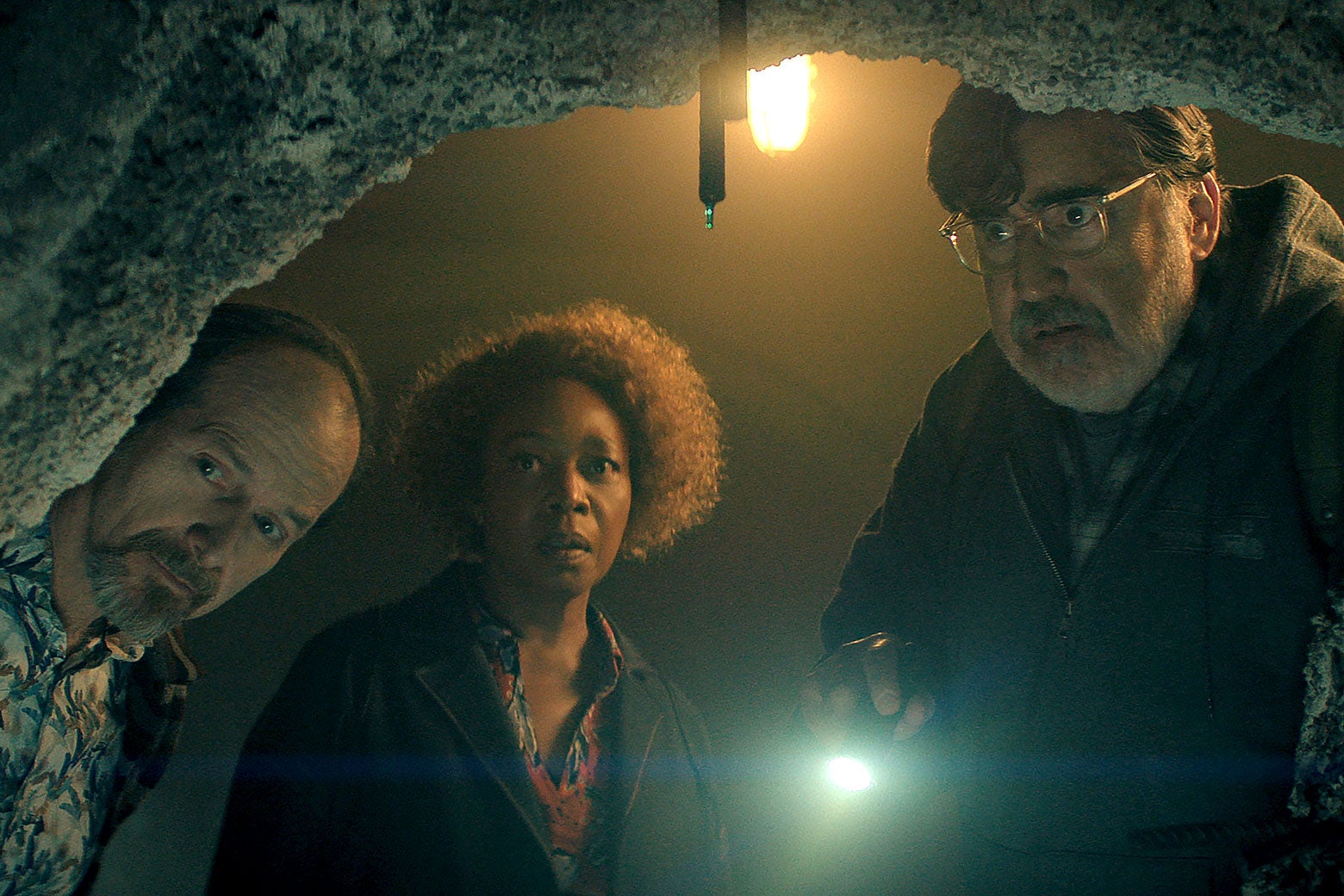
“If you watch our cold open, there’s about four different tones in three minutes,” says Addiss. “That was our sort of way of seeing, could we pull all of this off?”
Adds Matthews, “We knew we were pushing it.”