Paul Rodgers Reveals Why He Never Tried to Replace Freddie Mercury in Queen — ‘Nobody Could Do That’
When Queen announced they were returning to the road with Paul Rodgers, one question was almost impossible to avoid.
How could anybody possibly follow Freddie Mercury?
For Rodgers, the legendary voice behind Free and Bad Company, the answer was remarkably simple: he wasn’t going to try.
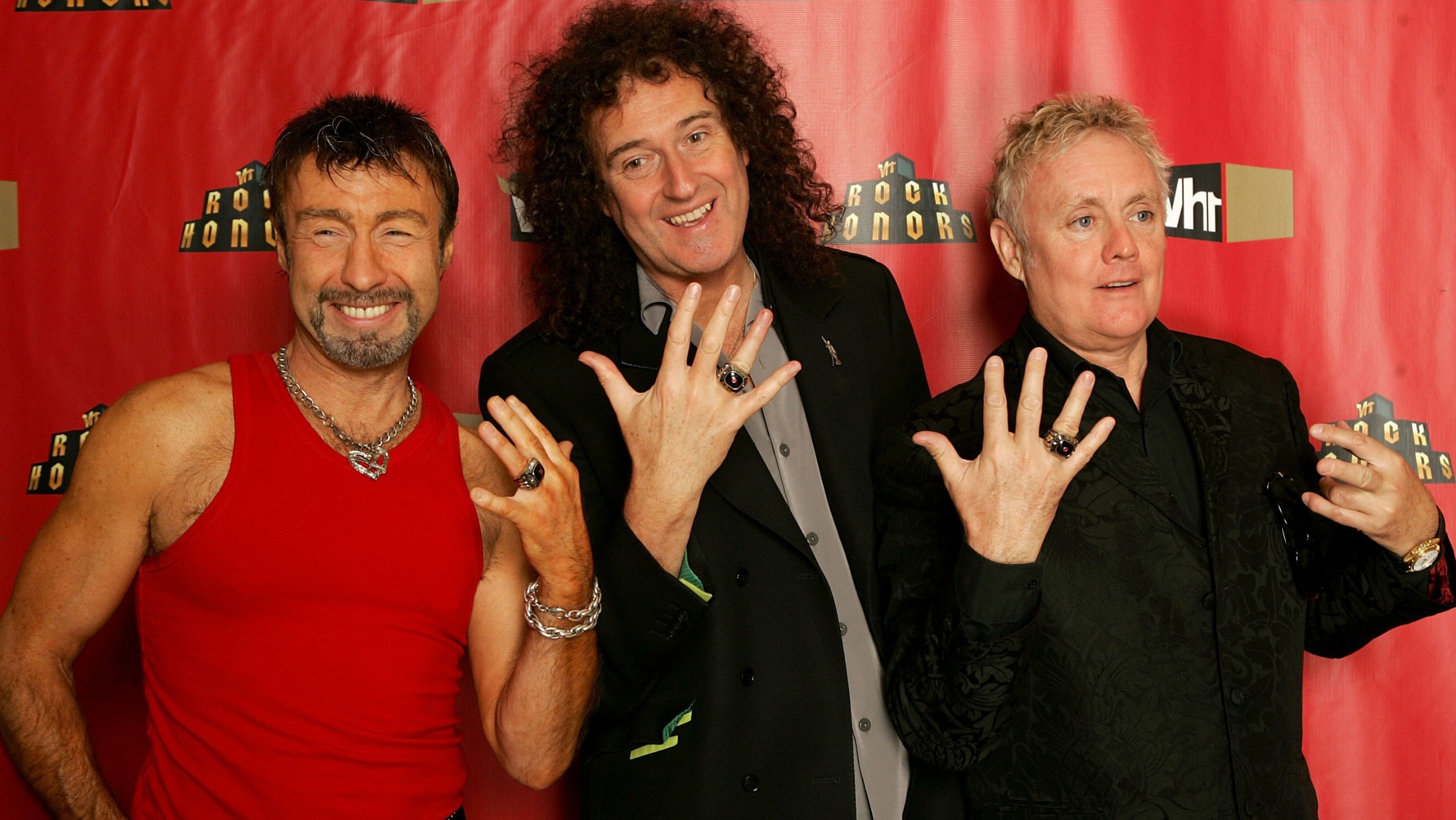
Thirteen years after Mercury’s death, Brian May and Roger Taylor confirmed in December 2004 that they would tour with Rodgers under a carefully chosen name — Queen + Paul Rodgers.
That plus sign mattered.
“I’m not actually replacing Freddie – nobody could do that,” Rodgers explained in a 2005 interview with Q magazine.
Instead, he intended to bring his own blues-and-soul background into Queen while honoring the singer whose presence still defined the band.
It Started With Three Songs and a Standing Ovation
The collaboration wasn’t part of some carefully constructed comeback plan.
Rodgers said he had been perfectly content performing around 30 solo shows each year when the opportunity unexpectedly appeared at the UK Music Hall of Fame in November 2004.
He planned to perform Free’s classic “All Right Now” and invited Brian May to join him.
May had another suggestion.
Rodgers would sing two Queen anthems with May and Roger Taylor: “We Will Rock You” and “We Are The Champions.”
“I’ve always loved those songs, so I jumped at the chance,” Rodgers recalled.
Something happened when the three musicians rehearsed together.
Even the veteran television crew watching them reportedly gave the musicians a standing ovation.
Rodgers knew there was chemistry.
Before long, an idea for three London dates had transformed into a 25-date European tour.
Queen Suddenly Had ‘An Embarrassment of Riches’

The new group wasn’t interested in performing only Queen material.
Rodgers brought an extraordinary catalogue of his own from Free and Bad Company, opening the possibility of concerts combining two different rock legacies.
Queen classics such as “Tie Your Mother Down” and “Fat Bottomed Girls” appealed naturally to Rodgers, while songs including “Wishing Well,” “Fire And Water” and “All Right Now” could represent his past.
The biggest problem wasn’t finding enough material.
It was deciding what to leave out.
Rodgers recalled Taylor describing their options as an “embarrassment of riches.”
Discussions with May about potential setlists could stretch toward imaginary four-hour concerts.
But there was one part of Queen’s catalogue Rodgers approached with particular care.
Bohemian Rhapsody Still Belonged to Freddie
Asked whether there were Queen songs he didn’t particularly want to tackle, Rodgers pointed toward some of the band’s more theatrical material.
And inevitably, the conversation reached “Bohemian Rhapsody.”
Rodgers had no hesitation about its importance.
“It is his masterpiece,” he said of Mercury.
Rather than attempt to imitate Freddie through every section, Rodgers considered preserving Queen’s traditional approach of leaving the stage during the famous operatic passage while recorded footage played.
The remaining sections were something he believed he could perform.
But the intention was clear: if “Bohemian Rhapsody” appeared, it would be handled as a tribute to Freddie, rather than an attempt to claim his signature song.
‘There’ll Be No Cape’
Rodgers also understood how dramatically different he was from Mercury as a performer.
“Freddie was very much a showman,” he said.
Rodgers came from blues and soul, bringing a different kind of stage presence.
Fans could expect movement, energy and rock ‘n’ roll swagger — but not an imitation of Mercury’s flamboyance.
“There’ll be no cape – and probably a lack of tights!” he joked.
More seriously, Rodgers emphasized his admiration for Mercury and the legacy he was stepping into.
“I’m going to bring what I can to the mix,” he said. “We’ll be paying tribute to Freddie and what he achieved.”
For Rodgers, Queen + Paul Rodgers was never supposed to pretend that the band’s history had simply continued unchanged.
The name itself acknowledged that reality.
Mercury was irreplaceable.
Rodgers was something different.
The Experiment Became Bigger Than Anyone Expected
Queen + Paul Rodgers began touring in 2005, performing material from Queen alongside songs associated with Free and Bad Company.
And what started almost accidentally eventually developed beyond the concert stage.
Rodgers had already suggested in 2005 that the three musicians might write together, estimating a 50/50 possibility of recording new material.
Three years later, that possibility became reality with The Cosmos Rocks.
The partnership ultimately ended in 2009 after one studio album, but Rodgers’ earliest comments reveal why the collaboration had worked in the first place.
He wasn’t trying to become Freddie Mercury.
He wasn’t attempting to reproduce Queen’s past exactly as it had been.
He simply wanted three experienced rock musicians to discover what might happen when they walked onto a stage together.
“I’ve dusted off my old rock ‘n’ roll shoes,” Rodgers said before the tour. “We’re gonna let rip and rock!”
For a singer stepping into one of rock history’s most intimidating positions, perhaps his most important decision had already been made.
Paul Rodgers never intended to replace Freddie Mercury — because, as he said before Queen + Paul Rodgers even hit the road, nobody could.