A telephone rings in the opening moments of Patrick Melrose, an old-fashioned set with a curly cord connecting the receiver to the base. A hand in a striped shirt reaches for it cautiously.
“Hello?” comes the voice of Patrick Melrose, deep, aristocratic, mournful and slightly unsteady. It is unmistakably Benedict Cumberbatch, although the camera takes its time before revealing his face.
The news from New York is devastating: Patrick’s father has died.

But Patrick’s reaction is not quite what it first appears to be.
He slowly sinks toward the floor, not because he is overwhelmed by grief but because he has dropped a syringe. A small spot of blood marks his shirt.
After he hangs up, his expression changes with agonising slowness. His eyes close. He breathes out through his nose. The corners of his mouth turn upward.
Heroin is rushing through his system, bringing with it a release from something deeper: the abusive relationship and childhood trauma that helped set him on the path toward severe drug addiction.
“Old bastard’s only gone and died,” he tells one of the women in his life.
He tells another that he is thinking about giving up drugs.
He then flies across the Atlantic, where that intention rapidly falls apart.
A journey through addiction and trauma
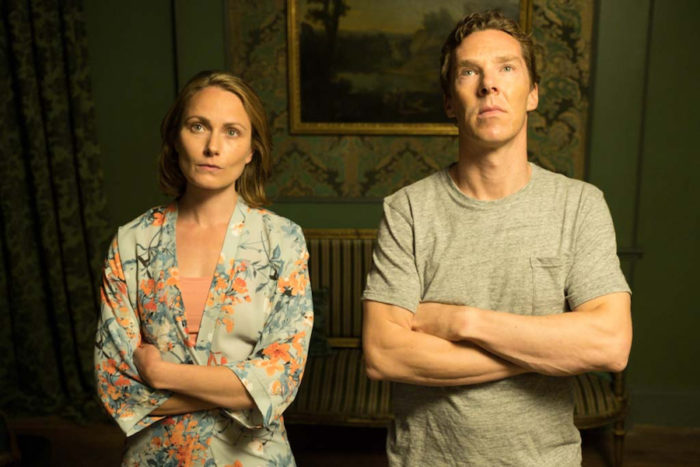
The first episode of Patrick Melrose, which aired on Sky Atlantic, was adapted by One Day writer David Nicholls from Edward St Aubyn’s autobiographical novels.
The episode covers two days in New York in 1982, while later episodes delve into Patrick’s deeply unhappy childhood and the experiences that shaped him.
In New York, Patrick attempts to deal with his father’s death while simultaneously spiralling further into addiction. Heroin is only one part of the problem. Amphetamines, quaaludes, Valium and alcohol all enter the picture.
He nearly fails to collect his father’s ashes.
He also comes dangerously close to killing himself.
On paper, the material could easily have become unbearable: a wealthy, deeply troubled aristocrat in 1980s New York, quoting Tennyson while spending money and consuming vast quantities of drugs, all against the background of a cruel father.
Yet Patrick Melrose avoids becoming merely a story about a privileged man behaving destructively.
Its real achievement is the way it explores addiction, trauma and privilege while preserving the intelligence and dark wit of St Aubyn’s books.
Turning five novels into five hours
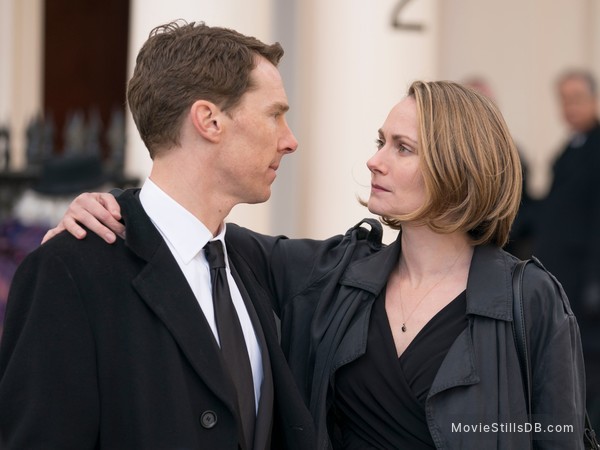
David Nicholls deserves considerable credit for adapting five novels into five hours of television without stripping away what makes them distinctive.
Three episodes were available to the reviewer, and each had its own personality, shaped in large part by its particular time and setting. Yet they remain connected, fitting together like movements in a symphony.
The writing is sharp, particularly when Patrick is effectively carrying on conversations with himself. The adaptation feels compact and intelligent rather than overloaded with exposition.
Edward Berger’s direction is equally important.
Having previously directed Deutschland 83, Berger captures New York in 1982 with a vivid visual style. His first episode is filled with scenes that remain difficult to forget.
At a funeral parlour on Madison Avenue, Patrick enters the wrong room and finds himself at a Jewish wake before eventually locating the correct one. When his father’s body is finally revealed, he reacts with grotesque, inappropriate humour, treating the moment almost like an unexpected gift.
There is also a disastrous date with an ambitious New York socialite who has no interest in taking a Quaalude or even having a drink.
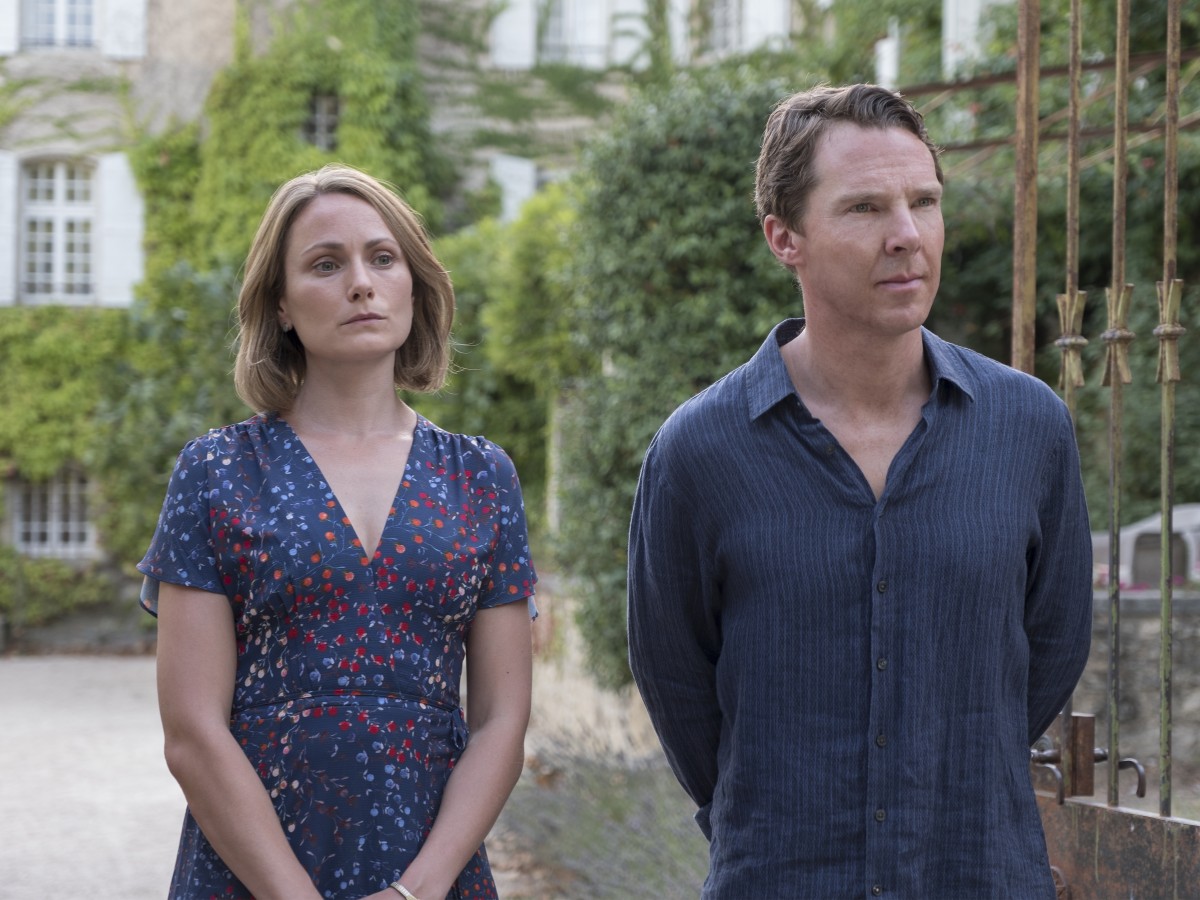
Later, Patrick shares a drink with a woman who witnessed part of his traumatic childhood. When the Quaalude takes effect, the entire world appears to slow down. Patrick’s voice becomes sluggish, the camera movement loses its energy and everything seems to have suddenly run out of power.
Then Patrick takes a line of speed in the bathroom.
Everything snaps back into motion.
The camera becomes jerky again. Patrick becomes charged with energy.
The effect is remarkably immersive. Rather than simply observing Patrick’s intoxication, the viewer is pulled into his altered state and made to experience something close to what he is experiencing.
Benedict Cumberbatch becomes Patrick Melrose
There are strong performances throughout the series.
Sebastian Maltz is haunting as the young Patrick. Hugo Weaving plays Patrick’s monstrous father, while Jennifer Jason Leigh portrays his emotionally damaged, detached mother.
But ultimately, Patrick Melrose belongs to Benedict Cumberbatch.
The actor had wanted the role for years, telling Radio Times that he was drawn to it. That ambition could easily have turned the series into an extended showcase for his acting range — a performance designed primarily to attract awards attention.
There may be an element of that.
But Cumberbatch’s investment in the character also gives the performance an unusually deep understanding of Patrick.
He gets the balance exactly right.
Patrick can be hilarious, but he is also tragic. He is irritating, exasperating and frequently difficult to tolerate. His behaviour is destructive, yet the performance never invites the audience to celebrate or glamorise his addiction.
Instead, Cumberbatch makes addiction itself feel like part of the character.
That is what makes his performance so compelling. Patrick is not reduced to a tragic victim, nor is he turned into a glamorous antihero. He is a deeply damaged man whose wealth and privilege have done little to protect him from the consequences of his past.
Patrick Melrose is therefore far more than a stylish story about an aristocrat taking drugs in 1980s New York. It is an uncomfortable, darkly funny and often devastating portrait of addiction and the trauma beneath it.
And at the centre of it is Cumberbatch, completely immersed in the role.

It is difficult to look away. Nor, after watching this performance, is it difficult to understand why awards attention would follow.