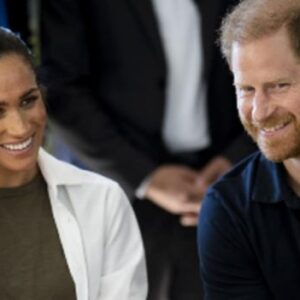
Prince Harry Opens Up on ‘Adrenaline Crash’ and Unresolved Grief in Revealing MasterClass Interview

Prince Harry has laid bare the emotional and physical toll of his lifelong struggle with grief, detailing how years of operating on raw adrenaline eventually triggered panic attacks and severe depressive episodes.
Appearing in a newly released MasterClass series alongside neuroscientist Dr. Mary-Frances O’Connor, the 42-year-old Duke of Sussex explored the neurobiology of loss, his 2019 departure from frontline royal life, and how the trauma of losing his mother, Princess Diana, drove his early military ambitions.
The ‘Adrenaline Crash’ in Canada
Reflecting on the pivotal weeks in late 2019 when he and Meghan Markle relocated temporarily to Vancouver Island with their son, Prince Archie, Harry described a physical collapse once removed from royal pressure:
“Being in Canada, away from the stressful environment where presumably my body was just pumped full of adrenaline, within two or three days, I experienced this adrenaline crash, something that I’d never experienced before. It was as if I needed stress in order to get the adrenaline to make my brain function because I became useless around the house. I actually slipped into depression for about two weeks, and I felt like I couldn’t function without adrenaline.”
Decades of Emotional Shutdown and Military Distraction

Harry explained that his reliance on high-stress environments began in childhood after Princess Diana’s death in a 1997 car crash, when he was just 12 years old. For nearly two decades, he survived by suppressing his feelings behind emotional numbness:
-
The Numbness Cycle: “For 15, 20 years, when I was being asked, ‘Are you okay?’ My response was, ‘I’m fine.’ It was numbness, emotional shutdown. And without knowing it, adrenaline was pushing me, was driving me.”
-
Enlisting as an Escape: Harry credited that fight-or-flight energy with leading him into the Armed Forces at age 20, calling the service the “perfect distraction” where mission focus blocked out internal grief.
-
The Breaking Point: Following his second deployment to Afghanistan in 2013, the suppression began to fail. Traumatic combat memories resurfaced childhood wounds, culminating in severe anxiety:“I started to realise that I probably had become seriously depleted when just putting a simple dress shirt on—the tightening of the collar—literally felt like I was suffocating, and I would be experiencing panic attacks just in the car on the way to work. And that’s when I realised, ‘Okay, there’s something bigger, there’s something else that you need to look into here.'”
Lighthearted Asides: Helicopters and Simple Introductions

Alongside the heavy discussions on mental health and neuroscience, a companion social media Q&A showed Harry striking a lighter tone.
When asked what subject he would teach if given the chance to lead his own course, Harry promptly answered that he would love to teach people how to fly helicopters. The Duke earned his provisional wings in 2010 on Firefly and Squirrel trainers before qualifying on the Apache attack helicopter, serving as an Apache co-pilot gunner during combat tours in Afghanistan.
And when asked how he prefers to introduce himself when meeting someone new, the Duke kept it characteristically informal: “Hi, I’m Harry.”