Harry and Meghan’s Nottingham Visit Puts Them on a Collision Course With the Palace as King Charles Sticks to Royal Duties
Prince Harry and Meghan Markle’s return to the British public spotlight has created an awkward dilemma for the Royal Family, with their carefully managed visit to Nottingham unfolding on the very day King Charles and Queen Camilla carried out a major constitutional engagement in Wales.
The Sussexes spent Thursday visiting community organisations in Nottingham, greeting supporters, posing for photographs and taking part in a series of public engagements that bore a striking resemblance to the royal duties they once performed as working members of the Royal Family.
Meanwhile, the King and Queen travelled to Cardiff to formally open the Welsh Parliament, the Senedd, carrying out their duties despite a small but vocal group of anti-monarchy protesters.
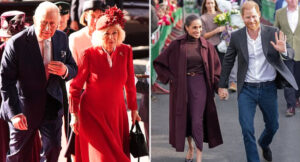
The contrast between the two appearances was difficult to overlook. While Harry and Meghan insisted their Nottingham visit was not an attempt to recreate a traditional royal tour, their public interactions and carefully coordinated schedule looked remarkably familiar.
For the Palace, the timing and presentation of the Sussexes’ return to the public stage are likely to be an unwelcome reminder of a dispute that has remained unresolved since the couple stepped back from royal duties in 2020.

Two very different approaches to public service
As the King and Queen arrived in Cardiff, they were met by demonstrators shouting “not my king”. Charles and Camilla continued with their official programme, maintaining their composure as they greeted those gathered to welcome them.
Camilla stood out in a vivid vermillion outfit, while Charles followed the established traditions of a formal royal engagement, meeting members of the public on the red carpet before entering the Senedd.
Among the most moving moments of the day was the King’s encounter with Gareth Jones, a survivor of the 1966 Aberfan disaster. Overcome with emotion, Jones clutched the monarch’s hand during their meeting.
The King and Queen also met Len Moss, an off-duty nurse who had rushed to the Welsh mining village after a colliery waste tip collapsed onto the local school in October 1966.
Moss spent two days washing the hands and faces of children recovered from the rubble so that their families could identify them. The encounter offered a poignant reminder of the lasting trauma of the disaster and the human stories behind the monarchy’s public engagements.
Inside the Senedd, Charles delivered a speech praising the building’s “spirit of public service”.
The phrase carried particular significance given the long-running disagreement between Harry and the Royal Family over what it means to serve the public while remaining connected to the monarchy.
Harry’s late grandmother, Queen Elizabeth II, supported by Charles, then Prince of Wales, and Prince William, took the position that members of the Royal Family could not maintain a halfway status as working royals while pursuing lucrative commercial ventures.
The Sussexes famously countered that “service is universal”, arguing that their commitment to charitable work could continue outside the traditional royal structure.
Six years after their departure, the debate over the boundaries of their independence remains a source of tension.

Harry and Meghan return to familiar territory
Harry and Meghan’s choice of Nottingham for their latest public appearance was significant. The city was where they undertook their first official engagement together in December 2017, shortly after announcing their engagement.
Their return on Thursday brought them back to the same setting, but their circumstances have changed considerably.
The couple visited three community organisations, including the Community Recording Studio (CRS), a youth and community charity, and Himmah Hub, a group working to tackle food poverty. Their schedule also included an engagement with Epic Partners, which supports young people.
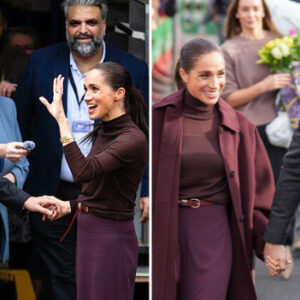
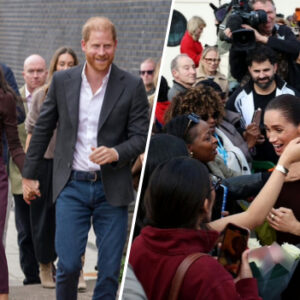
At each stop, the Sussexes met members of the public and took part in activities connected with the organisations’ work. They also greeted well-wishers, posed for selfies and accepted the attention of supporters who had gathered to see them.
Despite the insistence from their camp that the visit should not be viewed as a traditional royal away-day, the format closely resembled the public-facing engagements they once carried out on behalf of the Crown.
The resemblance was particularly striking during their walkabout, when Harry and Meghan interacted directly with the crowds.
Earlier, their team had reportedly indicated that a walkabout would not take place because of concerns about the security arrangements. Yet the couple subsequently took part in precisely the sort of public encounter long associated with working royals.
The episode raised questions about the distinction between their current private status and the royal-style appearances they continue to favour.

A familiar media strategy
The way the Sussexes organised coverage of the Nottingham visit also attracted attention.
Details of their engagements were distributed to journalists in an operational note, including royal correspondents. The Daily Mail’s correspondent was excluded from the circulation, according to Rebecca English.
Some journalists were invited to cover the events as part of an official Sussex media pool, with the opportunity to share reports and video footage from the day’s engagements.
There is nothing inherently unusual about journalists being organised into pools for major events. Reporters are expected to cover news impartially, regardless of who arranges access.
The more striking issue, English argues, is the apparent contradiction between this approach and the Sussexes’ earlier promises to establish a different relationship with the British press after their acrimonious departure from royal life.
Harry has previously described certain journalists as “pirates with Press cards”, reflecting his deep hostility towards sections of the British media.
Yet the arrangements surrounding Thursday’s visit appeared to draw heavily on the established methods used to coordinate royal engagements and their coverage.
In practice, the Sussexes seemed to be returning to a system they had once sought to leave behind.

Former royal aides remain close to the Sussexes
The familiar atmosphere extended beyond the schedule and media arrangements to the people working behind the scenes.
Among those accompanying Harry in Nottingham was Beth Herlihy, who previously worked as a programme coordinator for him when he was a working royal. She had also worked with William and Catherine through their Royal Foundation.
Herlihy later joined Clara Loughran, Harry’s former programme manager, in establishing a private advisory firm serving prominent individuals in the philanthropic sector.
Loughran was appointed a Member of the Royal Victorian Order in the 2019 New Year’s Honours List in recognition of her service.
The firm’s leading client in the UK is the Duke and Duchess of Sussex.
Both women have extensive experience of the Royal Family’s working practices. Their involvement helps explain why the couple’s latest engagements looked so familiar to observers accustomed to traditional royal tours.
The public walkabout, in particular, could easily have been mistaken for an official royal engagement, even though Harry and Meghan no longer carry out duties on behalf of the monarch.
For courtiers, who have repeatedly stressed that the Sussexes are private citizens and do not represent the Crown, the distinction is important.
It is also becoming increasingly difficult to maintain when the couple continue to organise public appearances that follow so many of the conventions of royal life.

The Sandringham Agreement remains a point of contention
The Palace’s frustration is understood to stem not only from the Sussexes’ presentation of their Nottingham visit, but also from the broader implications of their approach.
The Royal Household has made clear that Harry and Meghan are no longer working members of the monarchy and should be treated as private citizens, a position that reflects the terms under which they stepped back from their official roles.
The couple, however, appear determined to retain considerable freedom in how they conduct their public and charitable activities.
Their latest visit has therefore revived questions about the Sandringham Agreement, the arrangement associated with their departure from royal duties and the negotiations that followed their decision to establish an independent life.
Those tensions could be heightened by comments attributed to a friend of the couple in Hello! magazine on Wednesday. According to the report cited by English, the friend claimed that the agreement had been “foisted” upon Harry and Meghan and suggested that they had never genuinely agreed to its terms.
The remarks are likely to be unwelcome at the Palace, where the settlement has long been treated as an important part of the understanding surrounding the Sussexes’ departure.
They also suggest that the disagreement over the couple’s future role has not been resolved, despite the passage of six years.
What can the Palace do?
For now, there appears to be little the Royal Household can do beyond reiterating its position and refusing to be drawn into a public confrontation.
Harry and Meghan have chosen to pursue their own path, and their Nottingham appearance demonstrated that they can still command attention and engage directly with the British public without officially representing the monarchy.
The difficulty for the Palace is that such appearances can blur the distinction between private charitable work and the formal duties performed by working royals.
That distinction matters because the Royal Family has consistently maintained that its members cannot combine official royal status with independent commercial interests on whatever terms they choose.
William, meanwhile, kept a low public profile on Thursday. He was understood to be carrying out a previously planned “duchy day”, working privately on initiatives connected with the Duchy of Cornwall.
His absence from the public spotlight left the King and Queen to represent the monarchy during the opening of the Senedd, while his brother and sister-in-law drew attention in Nottingham.
The two engagements ultimately presented contrasting images of royal life: Charles and Camilla carrying out established constitutional duties, and Harry and Meghan undertaking charitable appearances that closely resembled the work they performed before leaving the institution.
For all the apparent irritation within royal circles, the King’s response was one of restraint. He continued with his official programme, meeting members of the public and carrying out his responsibilities without allowing the protests or the Sussexes’ parallel appearance to disrupt the day.
That approach is likely to remain the Palace’s preferred course.
Rather than respond publicly to every perceived challenge from Harry and Meghan, the King appears determined to continue with his duties and leave the debate over the Sussexes’ status unanswered.
For the moment, the divide between the two royal households remains as pronounced as ever, with little indication that either side is prepared to abandon its position.