King Charles Condemns Slavery As A ‘Shameful Chapter’ That Fills His Heart With Horror – But Praises Royal Navy For Helping ‘Crush Evil’
King Charles has delivered a deeply personal message on Britain’s history of slavery, describing the transatlantic trade in enslaved people as a “shameful chapter” that fills his heart with horror and profound sorrow. Yet, while acknowledging the country’s painful past, the monarch also highlighted the Royal Navy’s role in bringing the abhorrent trade to an end, praising the courage of those who fought to overcome what he called “the most monstrous injustice”.
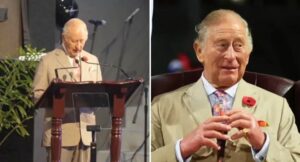
Speaking at the Commonwealth Heads of Government Meeting (CHOGM) in Antigua and Barbuda, the King insisted that history must be confronted rather than ignored, arguing that its darkest moments should serve as a lesson for future generations.
His remarks come amid growing pressure for Britain to issue a formal apology and consider reparations for its historical involvement in slavery, an issue that has cast a shadow over his nine-day Caribbean tour.

King Says Britain’s Slavery Legacy Still Casts A Shadow
Addressing delegates and world leaders from across the Commonwealth, Charles made clear that the consequences of the transatlantic slave trade remain deeply felt across the Caribbean and other member nations.
“The transatlantic trade in enslaved persons still casts a shadow over these islands and other Members of our Commonwealth,” he said.
He continued with an unusually personal reflection on the issue:
“As I have said before, that shameful chapter of history is one that fills my heart with horror and my soul with the most profound personal sorrow.”
The monarch acknowledged that Britain’s past contains both achievements and failures, stressing that the actions of previous generations cannot be undone, but that their consequences cannot simply be dismissed.
“History is not ours to choose or to change,” Charles told the gathering, adding that people inherit both “the good they did as well as the wrongs”.
His message was clear: acknowledging the past is essential, but learning from it must lead to meaningful action.

King Praises Royal Navy’s Role In Ending Slave Trade
Alongside his condemnation of slavery, Charles turned attention to the Royal Navy’s campaign against the international slave trade, highlighting the extraordinary risks faced by British sailors who helped bring it to an end.
“The evil need not have the last word,” he declared, pointing to the determination and courage that helped overcome one of history’s most profound injustices.
The UK Parliament passed the 1807 Slave Trade Act, abolishing Britain’s participation in the transatlantic trade between Africa, America and the Caribbean.
A year later, the Royal Navy’s West Africa Squadron was established to patrol the seas and intercept slave-trading vessels.
Over several decades, the squadron:
- Stopped approximately 1,600 slave ships.
- Freed more than 150,000 enslaved people.
- Helped bring the international slave trade to an end.
Thousands of Royal Navy sailors also lost their lives during the campaign.
Charles, who served in the Royal Navy for five years during the 1970s, praised the courage and determination behind those efforts, saying that character and courage could combine to defeat even the most monstrous injustice.

Calls For Reparations And A Formal Apology Grow
The King’s speech comes at a particularly sensitive moment, with demands for reparations and an official British apology becoming prominent during his Caribbean visit.
Antigua and Barbuda’s Prime Minister has called for reparations from Britain, while Prime Minister Andy Burnham has said he is “open” to the UK issuing a formal apology over slavery.
The issue is expected to feature prominently at CHOGM, where leaders representing all 56 Commonwealth member states are due to debate proposals concerning reparations and a formal apology.
Throughout the nine-day tour, Charles and Queen Camilla have maintained that they would not “shy away” from Britain’s historical connections to slavery.

Charles Calls For Action, Not Just Reflection
The King also used his address to outline how the Commonwealth could help address the lasting inequalities connected to the past.
He said that his own understanding of the issues had developed through listening, learning and looking, making him increasingly committed to building modern partnerships that could turn historical reflection into practical progress.
Among the areas he highlighted were:
- Education: Improving access to learning and educational opportunities.
- Employment: Investing in jobs and creating better prospects.
- Trade: Encouraging greater trade between Commonwealth nations.
- Climate resilience: Supporting measures to help vulnerable communities confront climate challenges.
Charles said he had always tried to contribute to lifting up people facing hardship and disadvantage, arguing that the Commonwealth had an important role to play in shaping a better future.
Using a maritime comparison, he added: “As any sailor navigating the seas knows, we cannot command the winds, least of all where the winds of yesterday have delivered us – but we can choose how we set our sails.”
He also stressed that the modern Commonwealth should not be defined solely by its history, but by how its members respond to the challenges facing the world today.
“In a desperately troubled world, the Commonwealth has welcomed new members who see the unique value of this organisation and have chosen to be part of its future,” he said.
With reparations and a formal apology now firmly on the agenda, the King’s address has placed Britain’s painful historical legacy alongside his call for a more constructive relationship with Commonwealth nations.