‘A Small Light’ Review: The Courageous Woman Who Risked Everything to Defy the Nazis and Save Anne Frank’s Family
While Anne Frank’s diary became one of the most powerful records of the Holocaust, the extraordinary woman who helped preserve her story remained largely in the background. National Geographic’s A Small Light finally brings Miep Gies and the ordinary people who risked their lives to protect Jewish families into the spotlight. The result is an eight-part historical drama that is as heartbreaking as it is deeply unsettling, particularly because the hatred it portrays has never entirely disappeared.
Rather than retelling the Holocaust exclusively through the experiences of its victims, the series takes a different approach. It examines the people who witnessed the persecution unfolding around them and made the dangerous decision to fight back.
At its center is a simple but uncomfortable question: What does it mean to do the right thing when doing so could cost you everything?
A Different Perspective on Anne Frank’s Story
Few stories from World War II are as widely recognized as that of the Frank family. Anne Frank’s diary, preserved and eventually published, gave generations of readers an intimate account of a young girl growing up under a regime determined to destroy her and millions of others.
But A Small Light shifts the focus away from the family whose story the world already knows.
Instead, it follows Miep Gies, the woman who, alongside her husband Jan Gies, helped shelter the Frank family, other Jewish families and anti-Nazi activists. Her courage was instrumental in keeping Anne’s words alive. Without Miep, the diary that introduced Anne’s voice to the world could have been lost forever.
The series also explores a broader network of ordinary people who refused to accept what was happening around them. These were not necessarily trained fighters or celebrated heroes. They were individuals who chose to act when remaining silent would have been easier.
That distinction gives the drama much of its emotional weight.
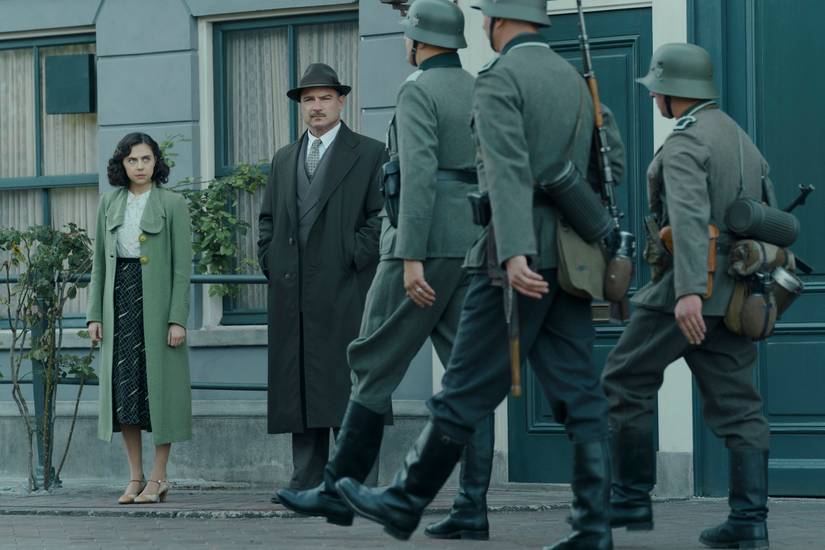
The story also carries an unsettling contemporary relevance. The propaganda, prejudice and divisive rhetoric that helped fuel the Holocaust are not simply distant historical memories. The series serves as a reminder that hatred can take root gradually, often while people who are unaffected by it continue enjoying their everyday comforts.
Bel Powley Delivers a Compelling Portrait of Miep Gies
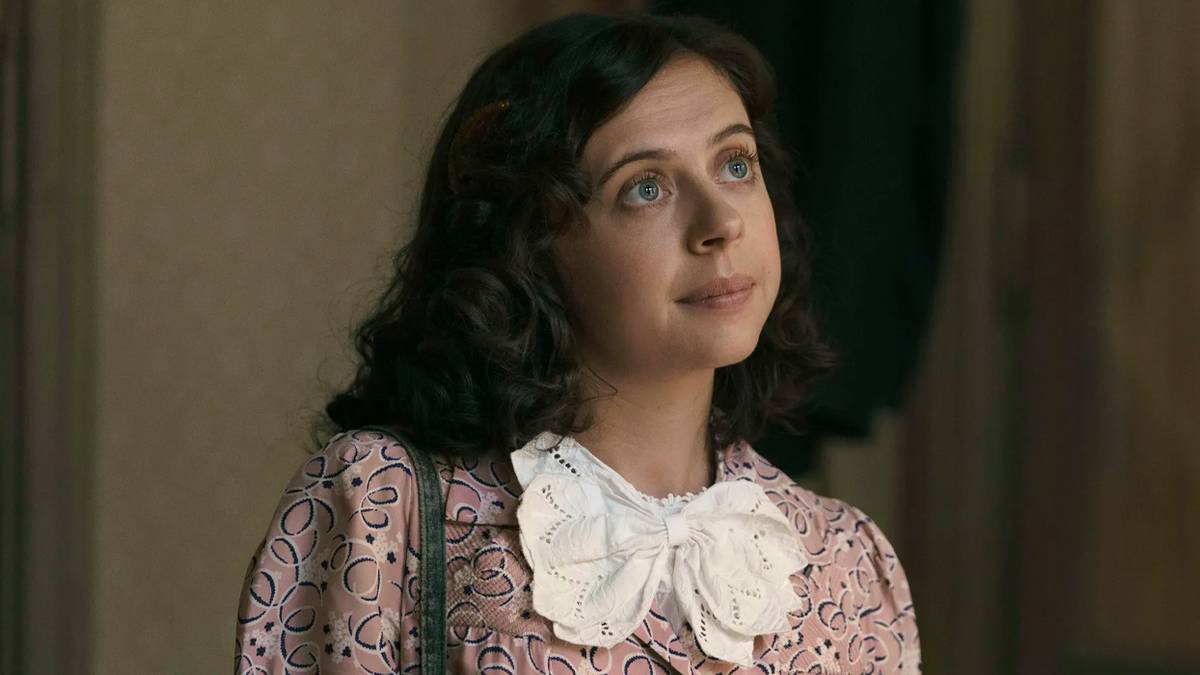
Miep Gies, played by Bel Powley, is introduced as a young woman with concerns that initially seem far removed from the horrors about to unfold.
She is trying to escape her adopted family’s efforts to arrange a marriage between her and her adopted brother. At the same time, she needs to find work and establish some independence.
Her search for employment leads her to Otto Frank, played by Liev Schreiber, a German businessman who has relocated to the Netherlands in an attempt to protect his family from persecution.
Otto is initially reluctant to hire Miep because she lacks experience. But her determination, personality and strong sense of right and wrong eventually earn his trust.
That relationship becomes the foundation for something far more consequential. As the danger surrounding Jewish families intensifies, Otto turns to Miep with an extraordinary request: help hide his family, despite the enormous risks involved.
Powley portrays Miep as both wide-eyed and fiercely determined, capturing the transformation of a young woman forced to confront circumstances few could imagine.
The storytelling also moves non-linearly, occasionally presenting events through the perspective of unreliable narrators. Anne Frank, played by Billie Boullet, brings a particularly interesting dimension through her persistent optimism, which sometimes shapes how the audience understands what is happening.
Miep and Jan Gies: A Love Story Forged in Dangerous Times
Beyond the desperate struggle to protect the Franks, A Small Light devotes considerable attention to the relationship between Miep and Jan, played by Joe Cole.
What begins as a marriage of convenience gradually develops into a passionate partnership between two people who refuse to stand aside while others suffer.
Their relationship is particularly compelling because they approach resistance in different ways.
Miep concentrates on helping the Frank family and other people in hiding. Jan, meanwhile, becomes increasingly involved with the Dutch Resistance, often concealing the extent of his activities to protect Miep from additional worry.
His involvement may take longer to emerge, but his actions frequently burn just as brightly as hers.
The series handles their contrasting approaches with nuance, showing that resistance did not have a single face. Some people protected families behind closed doors. Others confronted the Nazi occupation through underground networks.
Both carried enormous risks, and neither could simply return to an ordinary life.
Tess Shows How Easily Good People Can Turn Away
One of the more revealing relationships in the series is Miep’s friendship with Tess, played by Eleanor Tomlinson.
Tess is not portrayed as an inherently cruel person. Instead, she represents something potentially more disturbing: someone so consumed by appearances, comfort and personal survival that she becomes unwilling to acknowledge the suffering unfolding around her.
Her justifications for associating with people connected to the Nazi Party are rooted in her desire to survive and maintain her position in society.
But that is precisely what makes her such an important contrast to Miep.
Both women could have chosen a path of self-preservation. Both were living in the same increasingly dangerous world. Yet while Miep looks for ways to help those being persecuted, Tess repeatedly finds reasons not to confront the reality around her.
Through Tess, the series examines how ignorance and indifference can gradually compromise an otherwise decent person.
She is a fascinating, sometimes frustrating character because her behavior reflects a choice that many people would rather not examine: the decision to protect their own comfort at the expense of others.
The Historical Details That the Series Leaves Behind
Although A Small Light delivers a powerful account of Miep’s actions, it does take certain liberties with historical accuracy.
Some members of Otto Frank’s Opekta business staff are fictionalized, while the series gives relatively little attention to Bep Voskuijl.
Bep was another important figure who befriended Anne and helped the Frank family remain hidden. Her contributions were comparable in spirit to Miep’s, but the series appears to incorporate some of her role into Miep’s storyline rather than exploring her independently.
The decision may make the narrative easier to follow, but it comes at the expense of recognizing another woman who risked everything to help those in danger.
Miep herself once offered a particularly touching tribute following Bep’s death:
“The special thing about Bep was that she was so humble. She was heroic without bravura, simply assumed that the hiders in the Annex must be helped. For her, that wasn’t a difficult choice to make.”
It is a fitting description of the quiet courage at the heart of the series. Bep did not need recognition to understand what was right. Nevertheless, her contribution deserved to be remembered.
Beautiful Cinematography Makes the Tragedy Even More Powerful
The emotional impact of A Small Light extends beyond its performances and writing.
Cinematographer Stuart Howell and the production design team create a visual atmosphere that becomes increasingly haunting as the story progresses.
Particularly towards the end, when the war approaches its conclusion and the fate of the Frank family comes into focus, the images begin to feel noticeably empty and isolated.
The sense of absence is difficult to ignore. It suggests the disappearance of hope, life and the future that so many people should have been able to enjoy.
Howell’s restrained cinematography allows these moments to speak without relying on excessive visual drama.
The costume design by Matthew Simonelli also contributes to the show’s historical atmosphere. The clothing feels simple and lived-in, helping the characters inhabit their world naturally.
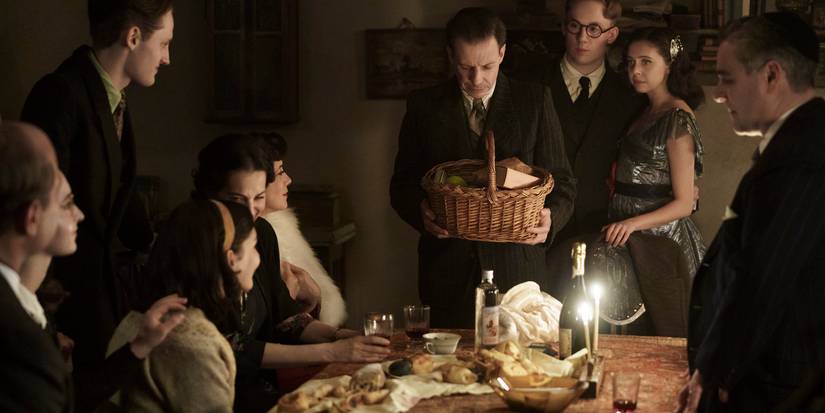
There are also striking visual contrasts between the extravagant lifestyles of people who continue dancing and celebrating and the terrible circumstances facing Jewish families under Nazi persecution.
That contrast reinforces one of the series’ most troubling observations: while some people were fighting for their lives, others carried on as though nothing was happening.
Why the Series Takes Its Time Telling This Story
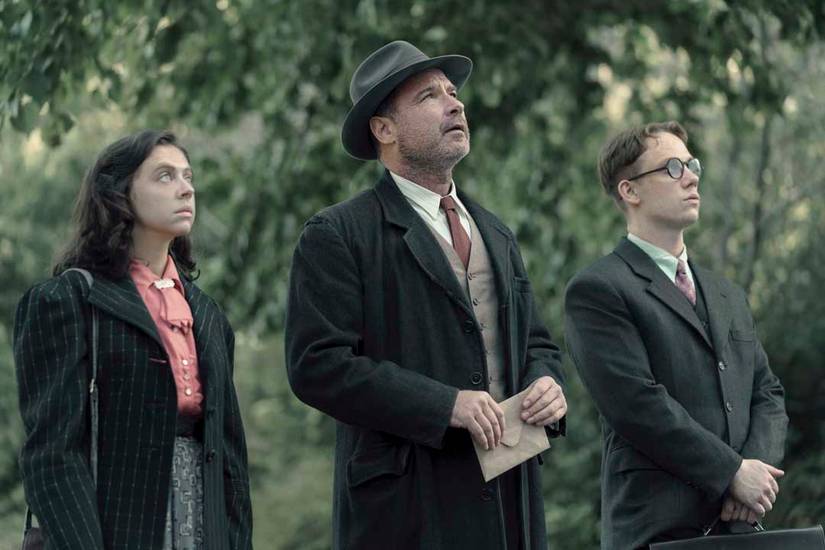
A Small Light occasionally moves at a slower pace, but that approach serves a purpose.
The Nazi occupation did not unfold in a single dramatic moment. Hatred spread gradually, and the lives of people untouched by persecution often continued with disturbing normality.
Likewise, Miep’s decision to help the Frank family was not one spontaneous act of heroism. It was part of a series of deliberate choices made over time. The same was true of Jan and the members of the Dutch Resistance.
That is also why presenting the story as a miniseries rather than compressing it into a feature film proves effective.
An abbreviated movie might have struggled to capture the gradual development of Miep’s courage, her relationship with Jan and the increasingly dangerous circumstances surrounding the people they were trying to protect.
Although its slower storytelling may make it harder to retain viewers from week to week, the eight episodes have considerable potential as a binge-worthy drama. Each installment builds on the growing sense of danger, allowing the emotional tension and historical consequences to accumulate.
Final Verdict: A Heartbreaking Reminder of What Ordinary People Can Do
A Small Light is ultimately a moving tribute to the people who choose to help when the world around them becomes increasingly cruel.
Across its eight episodes, the series balances moments of love, laughter and everyday life with the constant threat of persecution. It never allows the audience to forget what is happening beyond the characters’ immediate surroundings.
The drama does not attempt to make the horrors of the Holocaust gratuitously graphic. Instead, its restrained approach makes the suffering feel even more devastating. Terrible things often happen while ordinary life continues around them, and people do not always recognize the significance of the moment until much later.
The series may follow familiar conventions of historical biographical dramas, and its occasional historical omissions are disappointing. But its central message remains powerful.
History is not simply something that happened to other people in another time. It is shaped by the choices individuals make while events are unfolding around them.
Miep Gies and the people who stood beside her demonstrated that even when one person cannot stop an entire system of hatred, they can still make a difference in the lives of those it targets.
Sometimes, being a hero begins with refusing to look away.
Rating: B+
Release Information: A Small Light premieres on National Geographic on May 1, 2023. The series is also available to stream on Disney+ and Hulu, with new episodes airing Mondays on National Geographic and streaming on both platforms.